Ralph Walls Last Fishing Trip


Ralph Walls was my best friend. I was introduced to Ralph by a mountain of a man, Mac McDermitt. Mac, who was the kind of guy that simply took over a room as he entered, owned Capital City Excavating Company an underground contractor in Columbus. Ralphie, as we called him, was Capital City’s treasurer and accountant. As Ralphie would self describe, he was a bean counter. Ralph was an outstanding collegiate golfer who played at Ohio State and maintained a four handicap well into his fifth decade. Ralph took me under his wing and tried to teach me to play golf. I was not a very good student.

Ralph as Golfer 1992

Ralph as Golfer 1992

Another mutual friend, Lee Mitchell, provided Ralph and I with the opportunity of becoming fishing buddies as well as golfing friends. Lee owned a gorgeous 32 foot Bertram boat which he captained on Lake Erie. Ralph and I spent many crazy days on Lake Erie catching perch and walleye. When absolutely necessary, we quenched our raging thirst by drinking 7 oz Little Kings. As the summer sun heated up, Ralphie would often be heard to say “I need something for my lips.” Translation – is there a cold Little Kings or Heineken around?

Ralph had many other verbal masterpieces which are carried forward in my own personal vernacular. If I hit an errant golf shot and the ball was resting in difficult spot, Ralph would say “Rowe, you hit it here, now hit it out.” Translation – quit whining and put the ball back in play.

Ralph became a client. Ralphie would say, “Rowe, I will pay you for your legal advice and listen to your business advice.” Translation, I know you have opinions on how I ought to run the business but you are probably wrong.

 When I presented Ralph with a legal document for review, he would sadly shake his head and say “Rowe, you lawyers write all these words, but you never put pencil to paper to see if the numbers work.” Translation, you do not have a practical bone in your body or brain cell in your head!

In late-night gin rummy games, Ralphie was often heard to say, “Rowe, it’s a quick game.” Translation, please make up your mind and make a play!

Ralph and I would often share business and personal concerns. Even though we were guys, we could share not only what we were thinking but also how we were feeling about the challenges of the moment. When discussing a particularly thorny issue, Ralph would shake his head with amusement and say “Rowe, I do not understand everything I know about that.” I ask you to translate that profound observation.

When the incredulous occurred, Ralph would laugh and say ” Been to two goat ropins’ and three county fairs but I ain’t never seen nothing like that before!” Translation – sometimes there is just no explaining the events of real-life.

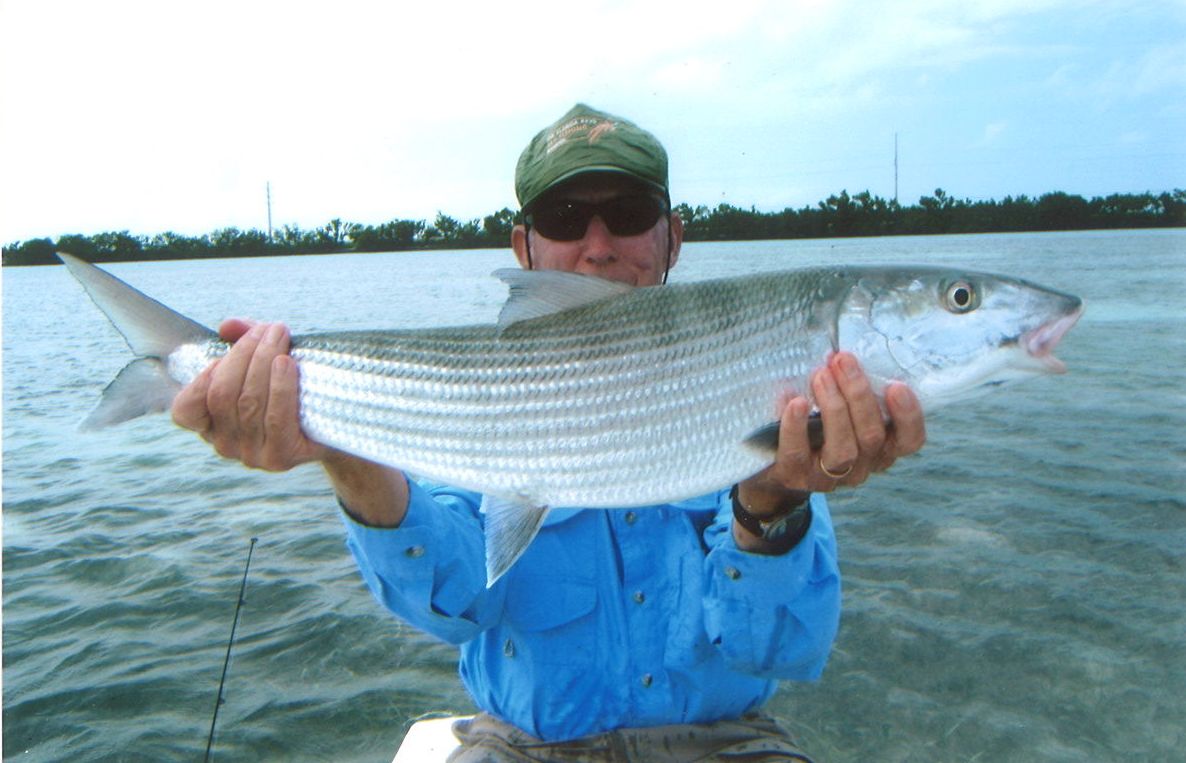
Each year, Ralph and I looked forward with great anticipation to a fishing trip to the Florida Keys. We dubbed that trip the FIFO Flats challenge. Over the years, many different fishing friends participated in the trip. However, Lee Mitchell, Ralphie, and I were the mainstays. Ralph and Lee fished for one or two years before I was invited to join the group. Starting in 1988, Ralph, Lee, and I would head to Marathon, Florida in the Florida Keys for a November week of pursuing bonefish, permit, and tarpon on the flats.

On November 26, 1989, Ralph, Lee, and I headed to the Keys with friends, Frank Catchpole, Bill Keethler, and Ron Souder.

Ralph and Frank Catchpole waiting on  the fishing day in front of Halls' Bait Store, marathon, Florida

Ralph and Frank Catchpole waiting on the fishing day in front of Halls’ Bait Store, Marathon, Florida

During our road trip certain rituals were honored. We would stop at World Wide Sportsman in Islamorada, Florida and speak with the owner, George Hummell, who had the distinction of being the personal bonefish guide of President George H. W. Bush. Another mandatory stop was the Green Turtle Inn where we dined on the Sunday evening before the fishing began.

As we dined at the Green Turtle, I noticed that as the adult libations were poured and stories of the prior year’s fishing were being shared, inaccuracies popped up. Knowing the nature of fisherman, I did not find the perceived exaggeration the least bit curious. However, I decided to do something about it. Upon arriving in Marathon at about 8:30 in the evening, I asked Lee if I could borrow his truck “Where you going?”  “Kmart,” I replied. “What for?” “Not telling you,” I replied. “Can I use the truck or not?” Mitchell tossed me the keys and off I went.

 I returned with a blank blue journal. For those of us who participated in this spirited fishing tournament known as the FIFO Flats challenge, the Journal became as cherished as the Bible to the religiously inclined. For over 20 years, every fish we caught was recorded. Every story was recited with only slight embellishment. Every adventure and misadventure was noted. As the years rolled by, I never went to dinner after a fishing day without the journal so that the stories we told could be checked against the facts as I had written them.

In thinking and writing about Ralph, the journal prompted many smiles. I hate the fact that Ralph is no longer here to smile with me. In 1993, Ralph discovered he had cancer. Even though he had been a lifelong smoker, the moment the diagnosis was delivered to him, he quit smoking.

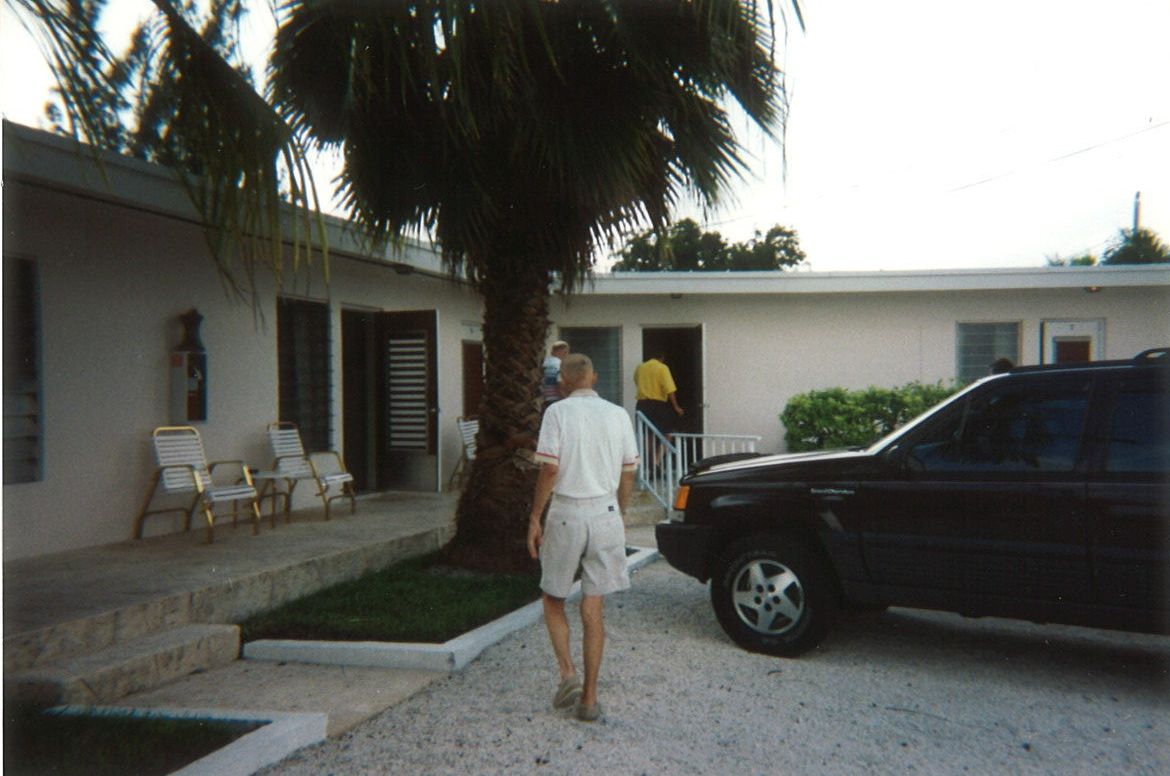
Ralph and his True cigarette at the Siesta Motel

Ralph and his True cigarette at the Siesta Motel

A couple of years later, I was visiting Ralph at his home during the final stage of his illness. As we talked, the phone rang. The caller was his doctor. After hanging up the phone, Ralph simply stated, “Doc said there’s no more treatment available for me”. He walked to a drawer in the kitchen, pulled out a pack of his old reliable True cigarettes and lit up. While there was hope of recovery, he was willing and able to do something for himself and his family. Quit smoking. I am certain that all of us have a bad habit we should surrender. If you do, stop now and let Ralph be your inspiration.

When the summer of 1994 rolled around, I sent our annual fishing letter to the prior year’s participants in the FIFO Flats challenge. Basically, the letter asked “are you going fishing or not? If you are going, send me a deposit of $300 which you will lose if you don’t go!”

 As I dropped the letter in the mail, I wondered whether Ralph would send me a check. He did. In the spring after the trip, towards the end of his life, we were talking and I asked Ralph if he had fun on the trip. He said, “No, but I am glad that I went.” Ralphie had a knack for saying things which delivered meaning far beyond the specific words he used.

By reason of Ralph’s illness, the 1994 trip was different. Ralph’s wife, Sherry, came along as nurse and roommate.
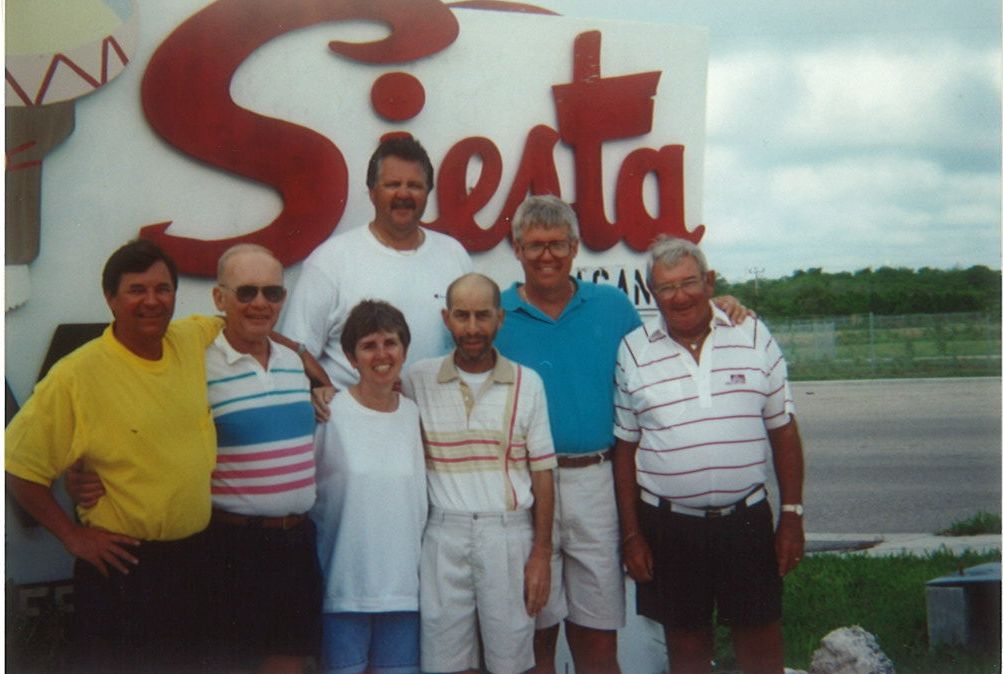
Sherry Walls and the Gang

Sherry Walls and the Gang

Sherry helped Ralph prepare as he faced the daily challenge of going to breakfast at Stout’s, climbing into a pickup truck with his guide and heading up or down Highway 1 to a fishing destination. Without Sherry, Ralph could not have fished.

Our guides also went above and beyond the call of ordinary duty. By the time of the 1994 trip, our fishing guides and Ralph were friends. The angler/guide friendship is unique. The relationship is based on a mutual love of a common endeavor. The friendship is nurtured by the respect a guide gives an angler such as Ralph who tried very, very hard no matter what the fishing conditions. The angler reciprocates by genuinely appreciating the skills of a guide who is willing to help an angler try to catch a fish which the guide knows he would without doubt land if only the guide could change places with the angler.

I want to share the events of Ralph’s last fishing week as reflected on the pages of the blue journal.

The first day of the Ralph’s last trip was November 8, 1994. Because of his illness, Capt. Harry Spear decided to fish Ralphie near Marathon where our home away from home, the Siesta Motel, was located. After a couple hours fishing, Harry ran Ralph into the Siesta for a nap.
Ralph Needs Some Rest

Ralph Needs Some Rest

After the rest, Ralph went back out fishing and caught an 11 pound bonefish which is no easy feat. The first run of an 11 pound bone is going to strip somewhere between 100 to 150 yards of line against the drag. Typically, the guide is screaming for his angler to stand with arms and fishing rod extended as far as possible overhead to create a sharp angle between where the line enters the water and the underside of the fish’s mouth. The angle is important to prevent the fishing line from becoming imbedded in the lush turtle grass growing on the Oceanside flats near Marathon. If the angler does not keep the line off the bottom, the streaking fish will eventually brush the line against a small coral head or sea fan and break off.  On this day, Harry was determined to do everything in his power to help Ralph catch the hooked fish even though Ralph could not stand up, let alone extend the rod over his head. Harry fired up the outboard motor and followed this big bad bonefish with the skiff. Ralph fought the fish while seated on the small casting platform strapped to the front of the boat. After a determined dogfight, the fish was captured and released – a good start to a physically challenging week for Ralph.

On November 9, 1994, Ralph and Rich Mealy fished with guide, Steve Huff. They could not find any bonefish but ran into a herd of permit. Ralph caught a 25 and an 18 pound permit. My journal notes indicate that they “chased Ralph’s permit for an hour.” A 25 pound permit typically takes 15 to 25 minutes to land. For a 25 pound permit to stay hooked for the better part of an hour without dragging the line against some obstruction to free itself was a miracle! Also, visualize the effort it took for Steve Huff to pole the 16 foot skiff loaded with two anglers for an hour chasing an angry 25 pound permit!

Steve Huff Unhooks Ralph's Permit

Steve Huff Unhooks Ralph’s Permit

On November 10, 1994, Ralph was feeling tired. He and I fished together with guide, Ray Fetcher. We quit at one o’clock and returned to the hotel. I later fished by myself wading High School Flat. As I entered the water, a huge bonefish was moving slowly along about 8 feet from shore. Needless to say, I did not catch it, but at least Ralph was getting his rest.

On November 11, 1994, the last day of the trip, Ralph and I fished with Harry Spear who launched the skiff near Islamorada. Late in the morning, Harry was running the boat towards a favorite Florida Keys fishing hole, Long Key Bight, which over the years affectionately came to be known as “The Bight”. All of us had sufficient fishing success in the Bight so as to cause us to genuflect each time we approached its entrance. As our boat was flew around the corner of a small mangrove island on the backcountry side of Islamorada, a pelican spooked from its perch in the mangroves and flew directly into the boat. The agitated bird struck Ralphie in the shoulder and knocked him to the bottom of the skiff. The pelican flopped around the boat. Ralph flopped around the boat. As he picked himself up, mildly irritated, Ralphie softly said “What the F…!”

Neither one of us fished well on that last day. We knew the unstated reality that this trip was our last together. We did not see fish well even though there were plenty of fish to see. We did not cast accurately to the fish we did see. According to the journal, we managed to catch one small bonefish the entire day. However, the fishing mattered very little.

All of us privileged to exist in this world long enough to have encountered some living and dying have reflected upon matters of the spirit. We have pondered the question of what awaits us after we pass from this earth.  As for me, my friendship with Ralph is kept alive even though he is not physically present. The memories of our shared adventures keep Ralph at my side. Perhaps this could be eternal life.

Long Key Bight was the last fishing water Ralph and I shared. Harry poled every bit of the huge expanse of the Bight but we saw no fish. As the beautiful golden November afternoon slid away, the angle of the sun sharpened. The brisk ever present wind began to lay down. Rippled water turned to glass. As Harry gently poled out of the Bight, he pushed the skiff approximately 50 yards from shore. The shallow water was punctuated by solitary mangrove shoots fighting to establish themselves in their salty home.

Suddenly in the final moments of the afternoon, a huge permit gently finned out among the sparse patch of mangroves directly in front of the skiff. Ralph and I saw the motionless fish and glanced at each other in wonder. The skiff drifted slowly towards the permit. The fish was not startled. The fish was not scared. The fish did not streak off in panic. We were awestruck. Even though we had our rods in hand with silver dollar sized blue crabs attached to hooks, neither of us cast. Harry said nothing. Harry had never before been mute when a fishing situation called for his angler to cast. The permit slowly began to swim directly in front of the bow of the boat no more than 10 feet from where we stood paralyzed. As we silently watched, the giant fish gently eased away from Long Key Bight on the watery path leading to a sun setting in the Gulf of Mexico.

Sunset Over Still Water

Sunset Over Still Water

As the silvery permit faded from sight, I whispered to Harry “If we had cast, what chance did we have to catch that fish?” Harry replied, “None”.

In over 20 years of fishing the Florida Keys, I have never seen a permit behave in similar fashion. This fish had no fear of what came next. Nor did it have any great concern for its current circumstance. Since that bittersweet last fishing day, the gorgeous old permit has for me represented Ralph’s spirit as he too slowly slipped away from his family and friends towards a different destination.


Chuck Sheley On The Key To Catching Big Fish: Go Fishing – A Lot

Chuck Sheley is a fisherman. Not only does he fish, Chuck catches fish. Not only does he catch fish, Chuck catches big fish. Since November of 1996, Chuck and I have spent a week each year fishing together in Florida with great fishing friends. Originally, our trip centered in Marathon. We chased bonefish, permit and tarpon around the Florida Keys. We were blessed to have great fishing guides for each of those years. Steve Huff, Dustin Huff, and Dale Perez provided us with many shots at great fish, poled into the wind, took us out in good and bad weather, encouraged us, and offered their abundant expertise on the saltwater flats for our benefit.

Our annual trip moved to the Everglades last year. Although Chuck could call Florida his fishing capital, he is from Ohio and has fished all over the world. He is extremely humble about his angling accomplishments but has graciously given me permission to brag about him a little bit. I must admit that as I write, it is easy to live vicariously through his angling accomplishments.

Part of the fun of each year’s Florida trip was bantering with one another as we negotiated the small side bets on the biggest fish of each day and week. Inevitably, when folks stand side-by-side on a bonefish skiff, or bass boat, bragging rights and a few bets are at stake. Obviously, the rest of us on the trips were optimists because we made the same losing bet each year on the largest fish even though Chuck kept winning.

Chuck almost always releases his fish. If he cannot get a fish to the boat quickly enough to suit him, he frets about its health. If a fish is hooked deep, he is upset. If a shark tracks down a hooked bonefish or permit and eats it, he may not speak for hours. So in return, perhaps as Steve Huff has eloquently written in the article which I have republished below, the fishing Gods have on occasion blessed Chuck because of the positive and joyous attitude he brings to fishing.

Steve Huff Tribute To An Angler

Steve Huff Tribute To An Angler

Chuck has caught the largest bonefish on the boat of Capt. Dale Perez, who has fished in the Florida Keys for well over 30 years. Chuck was fishing with friend, Lee Mitchell at the end of the angling day on Nine Mile Bank which is located in Florida Bay. Florida Bay is such a shallow body of water that a depth of 6 feet is considered a canyon. The Bay is a series of basins which are separated by mud banks. These banks restrict the flow of water as the tide comes in and out. Nine Mile Bank is one of the first barriers to the flow of water at the westernmost point of the day. Historically, it has been a tremendous fishing area. However, finding fish can be difficult because the salinity, oxygen level, forage and temperature very greatly from basin the basin. On this day, however, fish were tailing and waking as they came on to the mud bank covered with lush turtle grass with the incoming tide. Chuck and Lee were watching a school of three very large bonefish. They were moving slowly towards the skiff and at the last possible moment Chuck cast his shrimp in front of the three fish school. A huge bone picked up the shrimp and took off. Chuck’s recollection of the fight is of course dimmed by the reality of this huge once-in-a-lifetime catch.

Captain Dale Perez Holding Possible World Record Bonefish Caught By Chuck Sheley Chuck's Witness, Friend Lee Mitchell Also Pictured

Captain Dale Perez Holding Possible World Record Bonefish Caught By Chuck Sheley Chuck’s Witness, Friend Lee Mitchell Also Pictured

There is much speculation that the bonefish may have weighed as much as 18 pounds and been a world record on 10 pound test. Take a close look at the photograph and you will see the extremely large girth of the fish and the fact that Dale’s hand does not fit around the tail of the fish.

Chuck has also caught the largest bonefish on the skiff of Capt. Dustin Huff. This fish was caught in just off Duck Key. Dustin weighed the fish at 13 1/4 pounds on IGFA approved scales.

Chuck Sheley Largest Bonefish Ever Caught On Skiff Of Guide Dustin Huff

Chuck Sheley Largest Bonefish Ever Caught On Skiff Of Guide Dustin Huff

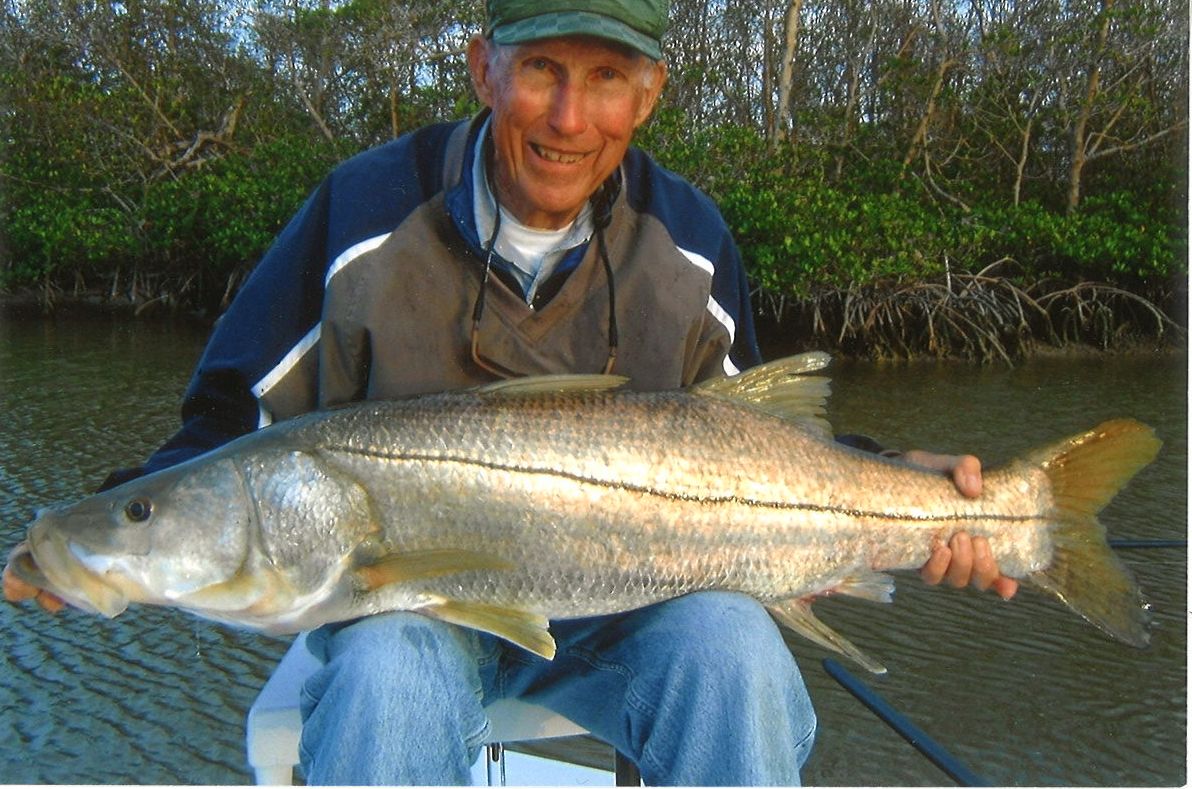
Chuck has caught the largest snook which IGFA Hall of Fame Guide, Steve Huff has ever touched. Chuck was fishing in January of 2005 in the Everglades with Steve at the time of the catch. The snook weighed 32 pounds and was 44 inches in length.

Largest Snook Ever Caught On Steve Huff's Skiff

Largest Snook Ever Caught On Steve Huff’s Skiff

On that same trip, Chuck caught a 14 1/2 pound snook on fly.

All of us who fish tell stories about the fish we have caught. Once in a while we have proof that the stories are true. I hope you enjoy the photographs and article which demonstrate much more eloquently than I can describe in my words the great skill, determination, and effort which Chuck has expended in pursuing his sport.

When I asked Chuck how he explained his success with big fish, he simply answered, “It pays to be lucky and fish a lot!”

So, fellow anglers, I encourage you to keep fishing… a lot. Who knows, the fishing gods may bless you with a little luck of your own!

Agitation Factor

Sunset Off Seven Mile Bridge

Sunset Off Seven Mile Bridge

This post is a sequel to “Dustin Huff Swims Seven Mile Bridge”. That adventure occurred on the morning of June 18, 1995. As all anglers know, a great catch early in the day does not quench an anglers’ thirst for another shot at a great fish. So the miracle permit caught after Dustin went swimming did not cause us to head for the dock. After Dustin dried off and released the permit unharmed, we ate lunch.

Lunch on a flats skiff is more like an eating contest than a meal. Experience has taught me that sought after fish just love swimming right up to the boat when it is tied off to the push pole, the rods are racked, and the anglers are eating. It is as if the fish know we are not prepared. Our solution is wolfing down the sandwiches and hopping back on the bow of the boat locked and loaded with rod in hand ready for the next shot at a bonefish or permit.

As we ate, Dustin pointed to the water just off the edge of Boot Key as the land curved into a point marking the beginning of the channel ocean side of Seven Mile Bridge. “See that strip of white sand off the point?” Dustin pointed out a football field shaped area of brilliant white sand with lush turtle grass forming the sidelines. “Baby tarpon lay up on that bank on an incoming tide which is just starting now. I’m going to tie on shock leaders and we’ll see if we can jump a baby tarpon.” Dustin whipped out some 80 lb test line, tied the shock leaders on both our lines, and baited the hooks with fresh shrimp. He jumped up on the poling platform after dislodging the tied off push pole from the mucky bottom of the flat. The rods he rigged for the baby tarpon were the seven foot spinning rods we had been using earlier in the day for permit. Our reels were spooled with 10 lb. test Ande clear monofilament.

Tarpon Daisy Chain Off Seven Mile Bridge

Tarpon Daisy Chain Off Seven Mile Bridge

Dustin spun the boat into the current and poled with the noontime sun directly overhead. Visibility was terrific. As we slowly moved towards the leading edge of the sandy bank, a couple of green missile shaped streaks were swimming slowly towards us. “Andy, cast as soon as you think you can reach the first fish. Drop the shrimp ten feet in front of the cruiser and let it sink.” Andy can really cast and did as instructed. The leading green shadow surged toward the sinking bait, opened its large maw and the shrimp simply disappeared. “Hit em, hit em, hit em!” Dustin screamed. Andy reeled down until he felt the weight of a hooked fish and did a terrific job setting the hook. We were in business. One problem. The tarpon was no baby and Andy was using 10 lb test line. The drag screamed as the fish made its first spirited run away from the skiff. Zzzzzzzzz. There is no better sound. Suddenly the water began to bulge in front of the huge tarpon as it launched into its first and only jump. Andy bowed to the fish and somehow the rig held. The fish was hooked!

Tarpon anglers can attest that each fight of a hooked tarpon is unique. Just as we humans have distinct personalities, so do tarpon. This fish acted as if it was a cranky middle child with a chip on its shoulder. After the first jump, this nasty tempered tarpon headed for the bottom and stayed there. The tarpon had an apparent first destination of the Gulf Stream which runs North off the Florida coast. The Gulf Stream was first reported by the Spanish explorer Ponce de Leon in 1513 when he discovered Florida. In the area where we were fishing, the stream is known as the Florida Current. The speed of the Gulf Stream varies. In areas where it happens be narrower it is faster than in wider areas. The speed is up to 2 meters per second. Interestingly, the Gulf Stream meanders. It is like a river which has no banks. It can be experienced as close to a quarter-mile from the Florida coast in spots. Our tarpon must have sensed this because the fish swim directly towards the fast current offshore.

Dustin fired up the boat as the tarpon began to tow the boat towards the ocean and into a depth of water where the push pole could not touch bottom. He also wanted to head off the fish before the bulldogging fish stripped Andy of the 300 yards of mono spooled on his Stradic 4000 reel. The fish cooperated and wheeled back towards shore.

For years I had heard my buddy, Mitchie tell stories of tarpon fights. “Never let the fish rest. Better to lose him early than late. Their rasp like mouth will eventually wear through even an 100 lb leader.” Unfortunately, Andy knew none of this as this was his first tarpon. After about twenty minutes, the fish began to tow the boat. The fish had settled down and was swimming, the tide was slack, the drag was not slipping and Andy could not gain on the fish. Still the skiff moved forward. Dustin coached, ” Reel down to the fish and then lift, reel down lift, reel down lift.” We edged close enough to see the fish in the water. “How big?”, I whispered as I stood on the stern next to Dustin who had jumped down from the poling platform when he fired up the engine. He had not begun to pole again as he hoped Andy could keep just enough pressure on the tarpon so the drag would not slip resulting in the tarpon’s effort in towing the boat wearing the fish out. “Well over 100 lbs., so much for baby tarpon.” Dustin responded.

Andy put very little pressure on the fish as he was inexperienced and I am sure could not imagine how much the 10 lb. mono would stretch if he tightened down the drag and pulled hard on the face of the giant. “We have no chance unless you put more pressure on the fish, Andy,” Dustin shouted. “Let me get the cooler up on the bow and you can sit down and use your hips to fight him.” After a few seconds, the cooler was on the bow and Andy settled down. He said nothing. We were two hours into the fight at that point. The fish swam and towed and Andy held on while we hoped for a miracle. With each passing minute, Andy’s shoulders slumped a little bit more as the fish fought on relentlessly. “The agitation factor is setting in,” whispered Dustin. For the tarpon, it was a life or death struggle. For Andy, it was a first time adventure with a very steep learning curve.

About a mile away from the hookup point, Andy’s fish was joined by another tarpon which began swimming beside the hooked fish. It was as if the confused or perhaps mildly amused tarpon had reached out for reinforcements. We had just concluded the fourth hour of the fight. During the first couple of hours I tried to offer the occasional light hearted remark to break the tension. “When am I going to get to fish, Andy?” No reply. “Great job, Andy!” No reply. “Hang in there, Andy!” No reply.

Slowly the fish pulled the skiff towards Marathon. Just as the shoreline begins to turn in towards Highway 1 and the High School flat, there is a small island about a quarter of a mile off the tip of Boot Key. The island contained a gorgeous home with sunrise views in the morning and sunset vistas in the evening. Just off shore were a couple of boats were moored. As we approached the island, we noticed several small children happily swimming. The tarpon swam straight towards the splashing children. We followed. When the fish was twenty feet from the kids and their cheerful spirited commotion, the tarpon spooked from the water vibrations and bolted in the opposite direction. The companion free swimming tarpon spooked a moment later and as it spun sideways in a mirror image move of the other fish, its tail hit the taut line and the hooked tarpon was free. Over! The struggle was over.

Andy was in a state of shock. As each hour passed, I had begun to think our chances of catching the giant improved. Dustin knew better. And now, Andy and I knew better.
Andy spun on the cooler and faced us. He was drenched in sweat and I sensed a hint of exhausted relief on his face. This struggle with a great strong fish was like life’s moments of uncertainty where we are trapped in the quick sand of the unknown unable to move forward. With resolution of the uncertainty, we can begin to live again. Once the giant tarpon was free, Andy could absorb the lessons of the fight preparing him to handle the next tarpon he encountered. An intense fish fight such as Andy’s also offers all of us a clear demonstration of how hard a wild creature will fight for life. With lessons learned, the next morning Dustin guided Andy to his first tarpon.

June 19, 1995 Andy Rowe's First Tarpon

June 19, 1995 Andy Rowe’s First Tarpon

Although Andy appears elated in the photo, I am confident that the memories of fighting a 100 plus lb tarpon on a bonefish rod and 10 lb test line are more vivid than the fish caught.

Andy's Tarpon Released

Andy’s Tarpon Released

Off To Alaska

I am excited to report that Lauri and I are off to Alaska for a two week adventure. One week on land and one week on the sea. I hope to have at least one fishing story to tell upon my return. I will be fishing the Upper Kenai River on September 6. I am told there could be some Granddaddy rainbow trout in the river. Now whether I can catch one is a totally different matter. Nonetheless, we all need rest. And for now, just as I rested with my Grandpa Hessey after a hard day of fishing in the photograph below, my blog, Front Yard Fishing, will be taking a brief rest until our return. Best wishes to all of our friends and family. Go Bucks! See you soon!

Fishing Is Very Hard Work!

Fishing Is Very Hard Work!

Izzy’s First Fish

Several days ago, I posted a story about my Grandpa Hessey. The events described occurred a long time ago. As we all know, time scorches by. I am now a Grandfather, commonly known in the family as Oompah. My first grandchild, Izzy, was born very early. She weighed 1 lb. 11 oz. Her home for the first several months was Children’s Hospital. Since my law office is only a few blocks away from Children’s, Izzy and I spent many weekday lunch hours holding hands through the holes in the side of her isolette. No doubt there are a few nurses in the ICU who remember a white-haired grandfather singing songs to his new granddaughter.

She has done so well. Nate and Amanda, her Daddy and Mommy, are such great parents. She has blessed our lives in ways unimagined by us until she arrived. But of course, I could not wait to see Izzy catch her first fish. Patience has never been one of my virtues, but Izzy made every day waiting for her to be big enough to go fishing with her Grandpa a day worth remembering. She has been the focal point of many happy and joyous moments for her Oompah and those who love her! For example,

Izzy took me to the Worthington Memorial Day Parade.

Keeping A Close Eye  On The Parade Action

Keeping A Close Eye On The Parade Action

Izzy introduced me to the stylish new hairdos of bathing infants in America.

Is There An Electric Current In This Bathtub?

Is There An Electric Current In This Bathtub?

Izzy makes Lauri, her Mimi, very happy and in turn that makes me very happy.

I Love You Mimi!

I Love You Mimi!

Izzy loves to flirt with Oompah in her sunglasses.

Looking Awesome!

Looking Awesome!

Izzy helped Oompah recover from knee replacement surgery by joining me for long peaceful naps on the front porch.

Nap Time - Nothing Better

Nap Time – Nothing Better

Izzy takes me to eat ice cream.

Yum!!!!!!!!

Yum!!!!!!!!

Izzy tucks me in bed when she gets her sleeper on and combs out her hair for the night.

Night Night!!

Night Night!!

But time passed quickly and a couple of weeks ago the big day for catching her first fish arrived. Her Daddy, Nate, my Mom and Dad, and I were allowed to go along. I had fished this gorgeous farm pond a couple of weeks earlier and I knew Izzy’s chances of success were extremely high and warned everyone to pay attention because catching that first fish would not take long. Our cameras and cell phones were ready to capture the action. Nate was of course in charge. I hope you enjoy seeing Izzy catch her first fish at age 3 as much as the rest of us did.

Top Ten Reasons To Take Your Family Fishing

Fishing Gave A Father Like Me Something To Give Baby Nate To Do Inside When Mom Is At The Grocery

Fishing Gives A Kid Something To Do Inside When Mom Is At The Grocery

Provides Early Childhood Exposure To The Outdoors

Provides Early Childhood Exposure To The Outdoors

You Can Ask The Kids To Stand Still And They  Will If One Of Them Is Showing Off  A Fish And The Others Want To Share The Limelight

You Can Ask The Kids To Stand Still And They Will If One Of Them Is Showing Off A Fish And The Others Want To Share The Limelight

Your Wife Always Outfishes  You Thereby Introducing You To The Concept Of Humility

Your Wife Always Outfishes You Thereby Introducing You To The Concept Of Humility

Your Dad Can Make A Fashion Statement

Your Dad Can Make A Fashion Statement

They Learn To Ignore A Little Rain In Their Life

They Learn To Ignore A Little Rain In Their Life

And Learn That When They Are Able To Ignore A Little Rain In Their Life The Rewards Can Be Great

And Learn That When They Are Able To Ignore A Little Rain In Their Life The Rewards Can Be Great

They Eventually Learn To Tie On Their Own Lures

They Eventually Learn To Tie On Their Own Lures

Your Kid Gets To Show Off The Sweatshirt You Will Not Let Him Wear Anywhere Else

Your Kid Gets To Show Off The Sweatshirt You Will Not Let Him Wear Anywhere Else

Fishing Gives A Guy Something To Think About Other Than You Know What On His Honeymoon

Fishing Gives A Guy Something To Think About Other Than You Know What On His Honeymoon

Chuck Dahn and Memories Of Dad

The most exciting part of sharing stories has been that good friends respond by sharing their own. Over the years, York Golf Club has had the good fortune of having a Club Manager named Chuck Dahn. Chuck is a man who goes about his job as if it is not work. Chuck recently shared memories of his Dad and a couple of photographs which I will share with you. Chuck was a crafty left-hander in junior high and played an important role on a great Miami University basketball team. However, his words make obvious that his athletic memories are best recalled in the context of his Dad. As you read his words, remember your family members and give thanks for the important inspirational roles they have played in your life and for the stories you have to tell about them. As Chuck tells the story:

Ridgeview Raiders

The crafty lefthander throwing Uncle Charlie, the dreaded curve ball

The crafty lefthander throwing Uncle Charlie, the dreaded curve ball

Miami University Basketball 1984

Chuck Dahn, member of Miami University basketball eam

Chuck Dahn, member of Miami University basketball eam

………..I can still hear my dad yelling at the ball games……….most memorable yell from dad, Assembly Hall (Indiana, Bob Knight), 1983, Indiana ranked #5 and we win by 8!!  I played the whole game and was exhausted after the game, but thrilled!!  Dad had 2 things to say to me at half court (where I met him and mom following the game)…1.  Did you hear me yell?  (17,000 screaming Indiana fans) 2. How does my shoulder turn look??  (Dad was a member at York till he passed away in 1991)……….My answers, “ I heard every word ”  and “ your shoulder turn looks great ”………..He was diagnosed with cancer the week before the game and battled till his last day!!    Dad was a WWII pilot (B-24) and an All-American football player at University of Dayton alongside Chuck Knoll!


Thanks for sharing Chuck!

GRANDPA HESSEY – MY FISHING HERO

My Grandpa Hessey was and still is my fishing hero. I have so many images of Grandpa which bring smiles to my face. Almost always, those images have to do with Grandpa and me in the outdoors. The photo below was taken in March of 1949, just one month before I was born. I wonder whether Grandpa knew his soon to be born Grandson would be a lifelong fishing buddy.

Early Spring fishing at Lake Erie

Early Spring fishing at Lake Erie

Grandpa worked for the United States Postal Service. His shift as a mail sorter began at 3 AM returning home at noon. Depending on the weather and time of year, he spent his off work time fishing, hunting or gardening. His interests complimented each other. He was quite a successful fisherman in his own right. He loved fishing for catfish. Apparently, some of his catches were worthy of publicity in the local paper.

Grandpa Hessey With A Big Catfish

Grandpa Hessey With A Big Catfish

0101_001 (00043245)

Grandpa was an organic gardener. His compost pile was the envy of everyone on Cory Street in Fostoria, Ohio. His fertile garden and lush lawn provided a perfect home for fat juicy night crawlers. As dew began to settle on the grass, he would grab two flashlights, hand me one, and into the backyard we would go. Slowly we eased our way through the lawn and along the flower gardens all the while moving the faint edge of the light cast by the flashlight slowly forward. The goal was to catch a glimpse of a night crawler on top of the ground. If you were really lucky, you could see two night crawlers intertwined. I of course had no idea what that was about. Once you memorized their location on the ground we would move the beam of light away and grab the slimy crawlers.

Fostoria is located in Seneca, Hancock, and Wood counties which intersect at the top of County Line Road one block from where my mother, Beverly grew up watching her father explore the outdoors. My Mother was also exposed to fishing at an early age. Apparently, Grandpa and Mom could not wait to get out of their Sunday church clothes before showing off a great catch of crappies.

A Sunday Catch

A Sunday Catch

The geology his home area was a boon to catching our own bait. Grandpa took as much pleasure in catching bait as he did catching fish with the bait. Agricultural ground in that part of Ohio is underlain by a seam of blue clay which is nearly impenetrable by water. In order to drain crop land, farmers of the area excavated ditches around the perimeter of their fields. Drain tile was installed two to three feet below the surface to carry rainwater from the fields to the ditches. As a result, the ditches would fill with water. Many of these water filled ditches were home to minnows, hard craws, and an occasional bonus of a bona fide bass catching soft craw.

My Grandpa made us narrow mesh seines which looked like two pieces of cheesecloth strung between bamboo handles approximately 3 feet long. The bottom edge of seine mesh was strung with lead stick sinkers. With the seine bumping the bottom of the “cricks”, we would slowly move upstream. For a little kid who was active enough for his Grandpa to call him a “wiggle worm”, bait catching was as much fun and sometimes a whole lot more active than fishing.

I can still sense the excited anticipation as my skinny arms lifted the seine from the water. I would peer over the edge of the net eager to discover what wriggling creatures would attempt to escape into the stream. When we were sufficiently armed with bait, we went fishing. Often, catching bait made a guy thirsty necessitating a stop at Stewart’s root beer stand where we would pull the car up to the old fashioned drive in. The cute waitresses would roller skate to your car, take an order for root beer in frosted mugs and return with a tall glass filled with the sweet tasting icy cold soda destined to wet our lips.

I learned a very important Grandpa Hessey lesson on those bait catching adventures. He would always say “Stevie, remember, you can never have too much bait!” To this day, I know that two dozen soft craws are better than one and three boxes of wax worms are better than two.

In early spring, Grandpa had a favorite quarry which he just knew was full of hungry pre-spawn white crappies. The quarry was nestled up against some railroad tracks. Often trains would go by. In early spring, I would amuse myself by watching the trains when there was no action. These were the same trains which you could hear from my bedroom in his home late in the evening. The conductors blew lonely whistles indicating the progress of freight across the street track intersections of the small Ohio town. I loved that haunting whistle because when it blew, I knew the next morning I would wake up and go fishing with Grandpa.

On one trip to the railroad quarry, Grandpa hoisted me up onto a stump some 4 to 5 feet off the ground. He handed me my 10 foot bamboo cane pole rigged with black linen line and a round red and white bopper. After baiting the hook with a “minnie”, I swung the bait into the water and watched impatiently for any quivering of the bobber indicating a bite. “I think you’re getting a nibble”, he would say often in an effort to keep me on my toes. My attention span was okay but not indefinite. On this particular day, the crappies were sleeping. I put the cane pole under one leg and began to pick bare vines from the side of the stump. I found that if I tugged just right, the entire bare vine could be stripped from the top of the stump to the ground. Being bored, I removed most of the vines from the fat stump and was quite proud of my efforts. I woke up the next morning an itchy mess with poison oak on every inch (yes, I mean every inch) of my body. Grandma chastised Grandpa, “Dick, what in the world did you do to this boy?” He shrugged as if to say this one will only learn the hard way. He was right.

On the southeast side of Fostoria, a series of quarries were dug as sources of water for the community. Well-stocked, we often fished these quarries in early spring. I remember days when the bopper continuously went under and I would yank my long cane pole with a well hooked crappie attched up over my head and behind me on the bank. I would laugh and scream, “I got one!”. Grandpa would smile.

In the fall, Grandpa would wander through the woods in the country. He must have known every farmer in the area because we never ran out of woods in which to look for squirrels, harvested fields where we could hunt rabbits and pheasants, orchards in which we could seek morel mushrooms and plots of walnut trees which yielded the strong tasting black walnuts Grandma used in Holiday desserts. Grandpa always asked permission to use others land even if he had been there before. I remember many a neighborly conversation about the weather, crops, and the Cleveland Indians. When we left a farm, we would always return to the farm house or barn and offer part of what we were taking home.

For the most part, Grandma tolerated the fishing. In fact, occasionally she fished with Grandpa.

Grandma Fishes Too

Grandma Fishes Too

She did put her foot down on one occasion when Grandpa decided he could pickle a 15 pound carp he had caught. My Grandparents home was originally heated by coal. The furnace had its own storage room. Black chunks the size of soft balls were dumped by chute through a window which could be opened to accept delivery into the basement coal bin. At some point, a conversion to gas occurred permitting my Grandpa to put the bin to use as a storage room to dry out the black walnuts he collected. Also located in the former coal room was a chest freezer in which my Grandmother stored fish, game and other food. Unfortunately, there was no light in the coal bin. The only source of light was from the adjoining room of the basement and the bare bulb cast illumination only a few feet into the bin. Grandpa had placed a large roasting pan filled with carp and saltwater on the un-illuminated end of the chest freezer. Not yet knowing about the carp, Grandma went down to get some food and opened the freezer lid. Splash! The slimy wet cold ugly fish glanced off her house dress and slid down her legs coming to rest on her feet. Thereafter, Grandpa did not brine fish in the basement.

Despite the carping she took, one Christmas Grandma gave her husband a canvas on metal frame ice shanty. I remember the ice shanty had been assembled, apparently by Santa Claus, as it was standing next to the Christmas tree when my brother John and I rushed down one very early Christmas morning to see what Santa had delivered. Grandma felt the shanty was needed because the previous year an ice fishing mishap had occurred. Grandpa had taken me ice fishing near State Dock located on Catawba Island which juts into Lake Erie. It was a late winter day. The sun was shining raising the temperature into the 40s. Grandpa had built a tackle box with two sled runners on the bottom to ease transporting his fishing gear across the frozen lake. He pulled the box across clear ice which reflected a deep blue sky while carrying an ice spud to be used to cut our fishing hole. When we were about 200 yards from shore, he stepped on a partially frozen hole and one leg was suddenly soaked to above the knee. He hoisted the dripping leg from the freezing water, shook it off, and looked at me. “What are we going to do now, Grandpa?” He took a brief chew on his unlit King Edward cigar and said “We’re going fishing. That’s what we came here to do.”

We fished the rest of the day. As the afternoon sun set and the temperature dropped, his pant leg froze. As I have pondered that extraordinary Christmas gift, I have come to understand that Grandma bought the shanty to keep Grandpa safe. I do not think she really grasped just how far out on Lake Erie he would walk to reach a spot where he sensed there were hungry yellow perch waiting below the frozen surface.

Grandpa also taught me that it is impossible to keep accurate time while fishing. One summer Sunday morning, we arose early to fish at the nearby stone quarry. We had some beautiful soft craws left over from the day before and it was essential they be offered to hungry bass before church. My Grandparents attended the Methodist Church where my parents were married. As my Father was a Methodist minister, church attendance was mandatory for me even when my parents were not around. So on this particular morning, we got an early start knowing Grandma would be waiting in her Sunday dress and hat ready to worship.

We fished off a bluff about 9 feet above the surface. The limestone wall was sheer and you could easily look down into the submerged trees which had fallen into the edge of the water. The plan was to hook soft craws through the tail and gently drop them down among the snags of the underwater tree limbs. Grandpa always taught me something new about fishing each time we went. Today, I was to put the soft craw on the hook. I was a little nervous. Having seined for soft craws previously, I was fully aware of the feisty critters pinchers. At Grandpa’s urging, I stuck my hand into the dark hole of the bait bucket and came up with a craw. I held it in one hand and as I moved the hook towards the tail, the agitated bait pinched my finger. I dropped the soft craw, it bounced once on the rock ledge and fell gently into the crystal clear water. As soon as it plopped near the submerged trees, the biggest bass I had ever seen gently eased itself off the bottom, opened its mouth and inhaled the free swimming bait as it scurried tail first towards the bottom.

Grandpa said, “Stevie, it works a lot better if the hook is in the craw.” The gentle reprimand was delivered with a smile in his voice. He then glanced down at his watch and I for the first but not the last time realized the impossibility of keeping accurate time while fishing. By the time we arrived home, the collection plate was no doubt heading around the church after the preacher had delivered his sermon. To make matters worse, Grandma had not gone to church because she was waiting to go with her husband and grandson. As we stepped into her tiny kitchen, she gently shook her head and said, “Well, if we had to miss church, I hope you caught something”.

Wandering through these memories brings to mind a permanent image of Grandpa which vividly connects us. I can still see him exiting his blue and white 1957 Chevrolet and walking up the path towards the back porch of his home. Between the driveway and the back porch was the largest sweet cherry tree in Fostoria. Below is a photo of my brother John and I with Grandpa as the cherry tree blossoms in the background.

My brother, John and I with Grandpa with the sweet cherry tree in bloom.

My brother, John and I with Grandpa with the sweet cherry tree in bloom.

No five people could pick the cherries the tree produced each June. The lowest branches were the same distance off the ground as Grandpa’s head. As he took large long strides with his King Edward cigar trailing smoke from his hand, I remember Grandpa would slide his head and shoulders to the left to pass safely under the lowest branch. As he ducked, he would glance at me with a smile.

The sweet cherry tree held symbols of the fishing customs of the 1950s. Grandpa was not a catch and release man. Every caught fish was cleaned to provide food for his family and neighbors. If the fish was an egg laden female, the eggs were fried and served at dinner. I really hated those! Grandpa respected the fish he caught in a way which scared me at the time. If he caught a really big fish, he would cut off the head and nail it to the trunk of that big old cherry tree. It seemed very gruesome to a young child. In fact, it still does. Reflection has helped me accept those rude fish mounts as Grandpa’s way of telling his fish stories. And so as I fondly remember my Grandpa ducking under the cherry tree and tell fishing tales of my own, I remember his smile and the stories those fish told. Grandpa you are missed and loved greatly by your fishing Grandson.

Dustin Huff Swims The Seven Mile Bridge

One of the Rowe family traditions was to let our children take a trip with a parent in celebration of their graduation from high school. Our son, Andy, had listened to me speak of fishing the Florida Keys for bonefish, permit and tarpon for many years. I am sure that all my children could sense their Father’s excited anticipation as the first Monday in November rolled around each year. I have been blessed to fish in Florida for a week each year since 1988 with a group of close friends and guides who became close friends as we shared caught fish, lost fish, stories, adventures, misadventures, and icy cold adult beverages.

Of course, I was thrilled when Andy decided that a trip to the Keys would be his graduation adventure. On our first morning, our guide, Dustin Huff, launched the bonefish skiff from the ramp of the Marathon Yacht Club. He raced to a bridge abutment on the old portion of the Seven Mile Bridge which runs from Knight’s Key (part of the city of Marathon, Florida) in the Middle Keys to Little Duck Key in the Lower Keys. Among the longest bridges in existence when it was built, it is one of the many bridges on US 1 in the Keys where the road is called the Overseas Highway.

There are two bridges in this location. The older bridge was constructed from 1909 to 1912 under the direction of Henry Flagler as part of the Florida East Coast Railways Key West Extension, also known as the Overseas Railroad. After the railroad sustained considerable damage due to the effects of the Labor Day Hurricane of 1935, the line was sold to the United States Federal Government, which subsequently refurbished Seven Mile Bridge for automobile use. Dismantled trackage was recycled, painted white, and used as guard rails.

The current road bridge was constructed from 1978 to 1982. The vast majority of the original bridge still exists, used as fishing piers and access to Pigeon Key but the original swing span over the Moser Channel has been removed. The old bridge is an idyllic place for walkers to exercise and gaze at the Atlantic Ocean on one side and the Gulf of Mexico on the other. If you ever get a chance to walk Seven Mile Bridge at sunset take it. You will be awestruck.

Sunset Seven Mile Bridge

We were blessed that morning with gorgeous weather. The sun was bright, the sky was a crushing blue, visibility on the flats was excellent. Dustin shut down the skiff near a bridge abutment on the old portion of the bridge. We were using 7 foot spinning rods and Shimano Stradic 4000 reels loaded with 10 pound test Ande monofilament. Dollar sized blue crabs were the bait. Dustin staked the boat off about 80 feet from the bridge abutment and instructed Andy and I to stand on the bow. Andy was to cast to the right and I to the left. We both loaded the rods and launched the crabs. As the baits landed we left the bails of our spinning reels open permitting the drift of the racing current to take the crabs towards opposite sides of the bridge abutment. Two permit were waiting. Each of us got strikes and set the hooks. Chaos erupted.

Andy’s fish went to the Gulf and my fish went to the Atlantic. Dustin screamed at me to back off my drag. “Rowe, you’ve caught permit before! Let’s get Andy’s fish and then we’ll see if yours is still on.” So here was Andy, taking his first cast at any saltwater fish and hooking up with the determined and wily permit. He fought the fish very well. Dustin, as always, gave great instructions. The permit made several bulldog like runs. After spending substantial energy, the fish began to circle the boat. Since the skiff was staked off, Andy began to walk along the gunnel, across the stern and back up the other gunnel to the bow. The fish continued to circle pulling as if it was a sidways frisbee straining into the current. Dustin was directing traffic from the poling platform. Each time Andy passed around the stern, he had to pass the tip of the spinning rod underneath Dustin’s legs and out the other side. On the third trip around, the taut monofilament brushed the screwhead which fixed the poling platform to the brace. “BING” It was over.

The disappointment settled on Andy’s face, but Dustin and I still had a permit out there somewhere free swimming in the Atlantic Ocean. Dustin got down off the platform, stored the push pole, and fired up the engine. I jumped up on the bow of the boat and tightened down my drag slightly, just enough to be able to slowly gather line as Dustin guided the bonefish skiff in the angle made by my line entering the water. We safely passed close to the old bridge abutment and slowly edgeed across the 300 to 400 yards between the old and new bridges. As we approached the new bridge, it became apparent that our permit, as most do when hooked, had swum at the nearest obstacle in the water. In this fight, our fish had somehow found its way through the H frame bridge abutment supporting the new portion of the Seven Mile Bridge deck. Unfortunately, the skiff would not fit through the uprights of the H.

Dustin slowed the skiff and seemed to be thinking. Silence hung over the boat. He said after a moment, “Rowe, you mind if I touch your rod?” The G. Loomis rod was brand-new. The reel was brand-new. I asked, “Why, what are you going to do?” Dustin’s question was directed to the notion that if a guide assists an angler in any way by touching the rod or reel while a fish is being fought, the fish could not qualify if it happened to be a world record. I wasn’t worried about that. Although a very lucky man, I am not that lucky. Dustin replied, “I’m going to tie your rod and reel to a life jacket, throw all of it overboard and drift it through the other side of the H.” I looked at the water. The tide was ripping from the Gulf to the Atlantic and the current was streaking right through the opening of the H. “Sure, why not?”

Overboard went my rod, reel and the life jacket. The splash left a sinking feeling in my gut. I was out of touch with the fish and my gear. Somehow, the odd misshapen raft drifted just as Dustin predicted under the uprights and out the other side. We picked the floating equipment off the surface of the water and unstrapped the life jacket. Relief shook my wet hands as I grasped the recovered rod and reel.

At this point, no one was certain we had a fish on the the hook. I had never gotten tight on the still unseen permit. But we had been able to follow the line from the old bridge to the new bridge and through the H frame. Unfortunately, as the fish swam through the H, the line had snagged somewhere below the waterline. It was impossible to see where.

“Rowe, can you handle the boat?” “Why, what are you going to do,” I asked. Dustin shouted,”I’m going to dive in, get the line in my hands and follow it down till I find where it is snagged! If I can free it, we’re gonna catch this fish!” I have never owned a boat but regardless of my inexperience, I said, “Of course I can handle the boat!”

I took the steering wheel and put my hand on the throttle as Dustin dove off the bow. By now, the tide was absolutely ripping through the bridge abutment. Nonetheless, Dustin found the line in the water, followed it hand over hand and then suddenly extended his arms towards the bottom and dove out of sight. Moments later he came up with the line in hand. He let go as the ocean bound current swept the line away from more trouble. He quickly swam to the skiff, gripped the bow edge rail with both hands and literally launched himself on board.

Dustin Huff Swims Seven Mile

Andy had been holding my rod and reel as I was controlling the boat and Dustin swam. Andy handed me the rod and reel. Once again I tightened the drag. This time there were no obstructions and soon I could feel the pulsing shake of the no doubt utterly confused permit at the end of the line. As the fish felt the pressure, he streaked off suddenly recalling the original hookset some thirty minutes earlier. Five uneventful minutes later, we had a 20 pound permit.

Miracle Seven Mile Bridge  Permit

Miracle Seven Mile Bridge Permit

I suppose there may be other guides who would jump overboard to provide his angler with an opportunity of having a fish story to tell for the rest of his life. If so I hope you are fortunate enough to fish with such a guide. I have enjoyed such a privilege. Thanks, Dustin!

Ginny Rowe Creates New Catfish Catching Method

Young Ginny (00042402)

As all parents know, teaching your children to fish does not mean that the teacher will participate in the angling. We have five children- four sons and one daughter. As I was taught to fish at an early age by my Grandpa Hessey, I could not wait to take my children fishing. Being an eternal optimist, I was convinced that while helping the kids fish by extending cane poles, tying on hooks and bobbers, putting on bait, removing wriggling fish, all the while trying to keep the kids from falling in a pond or river, I could still catch a fish or two myself. How wrong I was!

But Ginny proved to be a very adept student!

Ginny 1988 Bluegill

However, I am sure she never enjoyed taking a caught fish off the hook.

Ginny Fish On Shore (00042403)

As all parents know, whether or not lessons taught our children are carried foward into adulthood is often not known until years later. Recently, I learned that my daughter, Ginny, was fishing with friends at Indian Lake in central Ohio. Little did I know that her early fishing instruction would lead to creating a new and unique method of catching fish. I received a text from her describing her gift to the angling world. Let me describe it in her own words!

“Caught two catfish. Jessica caught this one. Video of us trying to get it off the hook. We needed a boy to help! The fish was caught using a very advanced “hot dog on hook” method. Hooked it through the eye… Was so grossed out by it’s whiskers and the fact that it was hooked in the eye that I couldn’t even try to take it off the hook. Needed my bad ass Mom’s help with that part!”

Makes a Father proud!

Ginny Rowe Making Their Eye Sore Employing The Hot Dog On Hook Method

Ginny Rowe Making Their Eye Sore Employing The Hot Dog On Hook Method